
The Public Mandate: Privacy, Sovereignty, and the Future of Tech
Written by Brian K. Long | Reviewed & Edited by David L. King II
The rapid ascent of AI has brought a corresponding rise in public skepticism. We are currently witnessing a defining moment in the relationship between technology providers and the public. The recent surge in user migration toward privacy-first search engines—with platforms like DuckDuckGo seeing record-breaking interest in recent weeks from users seeking to opt out of AI-heavy interfaces—is a clear signal that the public demands agency over their digital experience.
This outcry is a vital feedback loop. It forces the industry to shift from a “build-it-and-they-will-come” mentality to a human-centric philosophy that prioritizes transparency and choice. This desire for control extends to the hardware level, where we are seeing a growing trend of users gravitating toward privacy-hardened devices, decentralized applications, and independent financial protocols. As users increasingly seek alternatives to centralized data-extraction models, the tech industry is being reminded that public trust is the most valuable currency.
The companies that thrive in the coming years will be those that embrace decentralized architectures, prioritize on-device AI—processing data locally rather than in the cloud—and provide users with functional “off-ramps.” By treating privacy and security as foundational design requirements rather than legal hurdles, the industry can repair the fractured trust between developer and user, ensuring that the next chapter of human-technological symbiosis is built on a bedrock of consent and mutual benefit.
The Symbiosis Horizon: A Sustainable Future for AI and Data Center Architecture
The rapid integration of Artificial Intelligence into the global economy has triggered an unprecedented expansion of digital infrastructure. As of June 2026, data centers are consuming an estimated 1,000+ TWh of electricity annually. This surge has rightfully moved infrastructure sustainability from a corporate social responsibility objective to a primary engineering constraint.
In the mid-2020s, a profound skepticism took root regarding the rapid expansion of Artificial Intelligence and the physical infrastructure—the data centers and supercomputer arrays—that power it. This concern is understandable. When a technology transforms as quickly as AI, the friction between its gargantuan resource demands and the needs of local communities becomes a focal point of intense public debate.
However, contrary to the very well-intended but rather misguided public opinion, as we analyze the trajectory of industrial innovation in mid-2026, it is clear that we are not witnessing a zero-sum conflict between technological growth and environmental preservation. We are experiencing the beginning of a total systemic transformation. The engineering community, in collaboration with forward-thinking operators, is rapidly pivoting toward a new standard of infrastructure: one that treats water, energy, and ecological footprint not as externalities, but as core design constraints to be solved through advanced engineering.
To address some of the skepticism surrounding this growth, we must examine the technical realities of how the industry is pivoting. The goal is not merely to “offset” the footprint of our digital future, but to re-engineer the infrastructure itself to be inherently more efficient and symbiotic with the societies and environments it supports and serves.
Decoupling of Compute from Resource Consumption
For decades, the “data center” was characterized by massive, inefficient cooling towers that consumed billions of gallons of municipal water. That era is evolving rapidly.
The goal is no longer just “net-zero.” Through the implementation of next-generation thermodynamic systems, the industry is decoupling AI compute from traditional resource depletion as the tech industry works towards developing a future where carbon-negative and carbon-neutral footprints via rapid innovation and technology advancements will become a reality. None of this would have been possible without taking a closer look at the technology and physics in order to tackle major inefficiencies in ways never imagined before now, all thanks to human ingenuity working together with AI supercomputing to brainstorm and virtual prototype at breakneck speed—precisely as it was created to do from its very conception.
Thermal Management: From Consumption to Conservation
The traditional data centers have relied heavily on evaporative cooling, a practice that consumes billions of gallons of water annually. Modern data center architecture is moving away from this toward high-efficiency, closed-loop thermal management.
- The Liquid Cooling Shift: We are observing a fundamental transition from air-based cooling to Single-Phase Direct Liquid Cooling (DLC). By circulating dielectric fluids directly to the chip, heat is captured at the source with far greater efficiency. According to reports by EnergySolutions.co, this reduces the energy overhead (PUE) of cooling systems by 40–50% compared to traditional air-cooled environments.
- Decoupling from Municipal Water: New facility designs are increasingly adopting liquid-to-liquid heat exchangers and dry coolers. By isolating the internal cooling loop from the external environment, these systems eliminate the reliance on evaporative towers, drastically reducing water usage. While this technology is currently scaling, it represents a clear industry trajectory toward water-neutral operations.
Grid Integration: Toward Dynamic Symbiosis
One of the most persistent concerns is the strain on regional power grids. In 2026, the strategy has shifted from “passive consumption” to “active grid participation.”
- Load Flexibility: Data centers are increasingly being designed to act as flexible loads. Through advanced software orchestration, operators can shift non-latency-sensitive workloads to align with periods of high renewable energy production (e.g., peak solar or wind hours).
- The Role of Baseload Power: As grid operators manage the retirement of coal and the variability of renewables, the data center industry is actively exploring firm, carbon-free energy sources. Small Modular Reactors (SMRs) are a primary focus; while most remain in the permitting or early-development phase, the industry’s engagement with SMR technology is central to securing the 24/7 clean power required for AI at scale.
- Waste Heat Repurposing: We are moving toward a circular economy model where heat—previously treated as a byproduct to be vented—is captured and repurposed for district heating or controlled-environment agriculture. While not yet universal, the integration of heat-recovery infrastructure is becoming a key differentiator for next-generation, campus-scale deployments, technology hubs, and possibly even the tech resorts of the future.
AI is the Engine for Scientific and Human Advancement
AI is the Future of Medical and Scientific Breakthroughs—Beyond infrastructure efficiency, the true value of these investments is the acceleration of problem-solving in fields critical to human well-being. The true measure of AI’s impact is found in its capacity to accelerate wellness through the rise of Virtual R&D, compressing the timeline for discovery.
- Molecular Simulation: The use of AI in drug discovery—specifically in physics-enabled simulations of protein folding—is entering a critical validation phase. By reducing the reliance on “wet-lab” trials for every hypothesis, AI is streamlining the development of therapeutics. As of 2026, the focus has shifted from the “hype” of discovery to the “rigor” of Phase III clinical validation, where we are beginning to see if these tools can reliably improve patient outcomes at scale thanks to rapid prototyping of therapeutics for previously intractable diseases.
- Clinical Augmentation: In healthcare, AI is serving as a “longitudinal insight engine,” identifying early patterns in development and pathology that would be invisible to the human eye. This allows for proactive care, shifting our medical systems from a model of “treating the sick” to “preserving health.”
- Bridging the Skills Gap: AI-guided, high-fidelity simulation platforms are fundamentally changing how technical expertise is acquired. By providing adaptive, personalized training, these systems help bridge the gap between rapidly evolving technology and the workforce’s ability to operate it. This is not about “replacing” human decision-making; it is about providing the tools that allow humans to focus on complex, high-judgment architectural and ethical challenges.
A Call for Strategic Clarity: The Future of Responsible Innovation
To the public, industry leaders, technology developers, government stakeholders, the intelligence community, and the global investment sector:
We stand at a critical juncture in the evolution of our digital infrastructure. As the demand for computational power accelerates, so too does the scrutiny surrounding the environmental and strategic costs of that growth. While the public discourse often centers on the silence of corporate press releases, a more profound transformation is occurring behind the scenes: a fundamental shift in engineering reality.
Industry is not dismissing the concerns of society; it is answering them through architecture, while maintaining industry-leading supremacy by protecting intellectual property and trade secrets.
Driven by the necessity of resource efficiency and the weight of public accountability, the vanguard of technology is pivoting. We are seeing a decisive move toward closed-loop liquid cooling, waste heat recovery, and the integration of Small Modular Reactors (SMRs). This is not merely a technical optimization—it is a strategic necessity. By prioritizing grid flexibility and water neutrality, the industry is transforming resource constraints into operational imperatives.
Furthermore, we must recognize that in the realms of energy independence and strategic compute capacity, absolute transparency is often a precursor to vulnerability. Many of the most vital infrastructure decisions—those that secure our national interest and ensure long-term stability—must be handled with the deliberate caution that security requires.
We call for a new standard of maturity in this conversation. We ask the public to look beyond the rhetoric and recognize the trajectory of the engineering. We ask industry leaders to bridge the communication gap, turning their technical achievements into a clearer dialogue with those they serve.
The feedback loop between society and technology is working. By aligning our collective oversight with the hard realities of engineering progress, we can ensure that the infrastructure of tomorrow is not only powerful and secure but fundamentally aligned with the preservation and prosperity of all humanity.
The future is being built—not in headlines, but in the efficiency, security, and ingenuity of our systems. Let us ensure that the world understands both the stakes and the progress being made.
The Reality of the Transition
The discourse around AI often misses the nuance of the current state: we are in the middle of a massive engineering pivot. We are not “decoupled” from resource consumption today, but we are building the frameworks to make that possible in the near future. The industry’s commitment to renewable sourcing (reaching ~92% in some hyperscale portfolios) and the transition to liquid-cooled, grid-interactive infrastructure are real, verified trends.
The path forward is one of rigorous engineering and transparent accountability. The infrastructure being built today is a bridge to a more efficient, more intelligent world. By focusing on site-specific grid integration, transmission planning, and the scaling of closed-loop cooling, the tech industry is working to ensure that the expansion of AI provides a tangible, positive return to society.
We are not building a replacement for humanity. We are building the foundational tools that allow us to solve the most complex problems of our time—from the climate crisis to the next generation of life-saving medicine. The machine provides the intelligence; the human provides the intent. That symbiosis is the true legacy of this technological era.
Redefining Human Labor: The Augmentation Paradigm
Beyond the infrastructure, the most persistent fear regarding AI—the displacement of human labor—reflects a misunderstanding of how technology evolves. We are not automating humanity; we are automating the constraints of industrial production and mundane tasks. Human intelligence, creativity, ingenuity, and brilliance are irreplaceable assets sitting at the apex of everything the technology industry exists for.
The Edison Perspective
When the lightbulb was introduced, it did not destroy the value of the human worker; it eliminated the limitation of darkness. It allowed for the creation of an entirely new economy—the 24-hour global society. AI is the “electric light” of cognitive labor. By automating the high-volume, repetitive synthesis of data, we are not making humans redundant; we are freeing them to move up the value chain. Thomas Edison once said that genius is 1% inspiration and 99% perspiration. AI is currently automating the perspiration aspect for humanity.
- The Shift to Architectural Roles: We are seeing a structural migration of roles. Administrative, data-entry, and routine diagnostic tasks are increasingly handled by AI co-pilots. This is not a “loss” of jobs; it is a redirection of talent into higher-level domains of strategy, creative synthesis, and complex negotiation—skills that remain uniquely human.
- Rapid Workforce Development: One of the most hopeful developments of 2026 is the use of AI to bridge the education gap. AI-guided, high-fidelity simulation and training platforms are allowing individuals to gain years of professional expertise in a fraction of the time. This “rapid onboarding” ensures that as roles evolve, the workforce is empowered to evolve with them, creating more equitable access to technical advancement. In a world where rapid innovation takes center stage, advanced workforce development and skills training initiatives become increasingly paramount factors that require addressing.
A Future of Symbiosis Between Humanity and Technology
The future of technology is not a landscape of disconnected, corporate-controlled power. It is a future of resilient, distributed infrastructure.
The engineers working to solve these challenges—from the way we cool our servers to the way we train our workforce—are driven by a singular goal: to ensure that technological advancement serves as a shield for humanity, not a threat to it. We are not engineering for the sake of efficiency; we are engineering for the sake of human flourishing.
To the younger generations, the students, and the concerned citizens: The challenges you see today are the very problems the industry is currently solving. The resource intensity of the past was a bridge, not a permanent state. We are building a future where intelligence is abundant, clean, and accessible, and where the human being remains firmly at the center of the technological horizon.
“We are not entering an age of replacement. We are entering an age of expansion. The machines will handle the vast, recursive work of the modern world, and in doing so, they will provide us with the freedom to focus on what matters most: the advancement of our species, the healing of our planet, and the continued exploration of our collective potential.”
-David L. King II
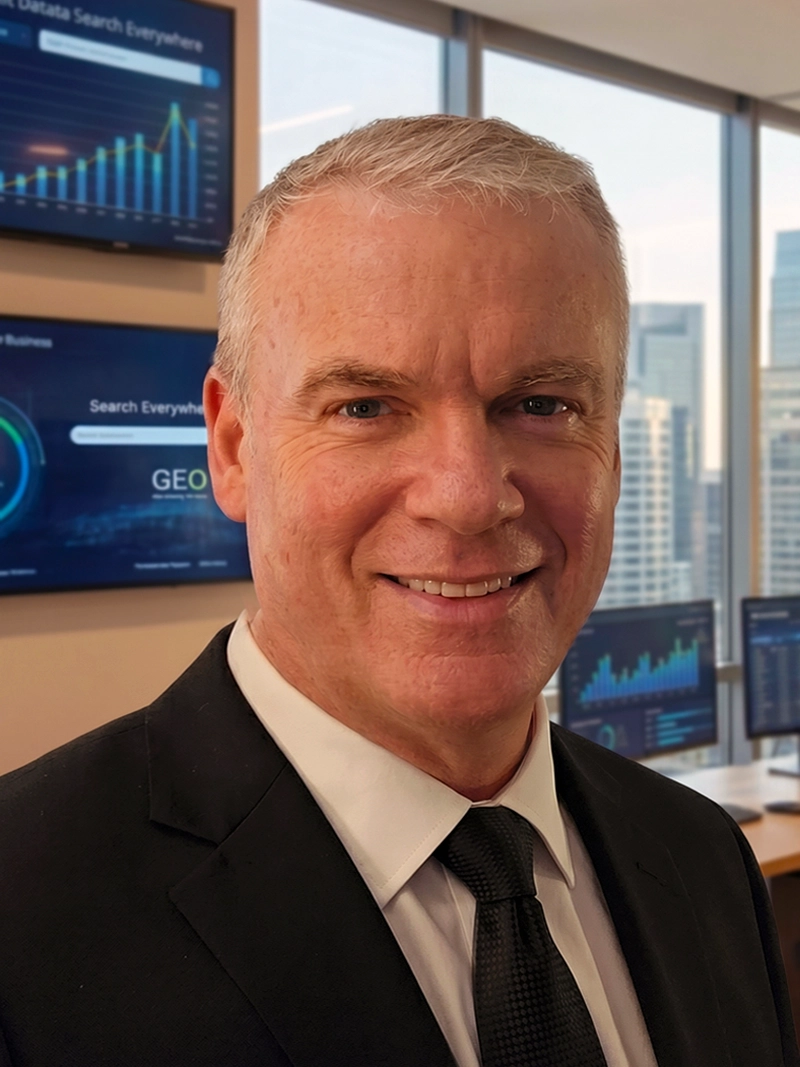
Brian K. Long
Futurist, Technology and Strategy Advisor
Brian K. Long is a visionary systems architect and industrialist with over three decades of experience pioneering mission-critical innovations across the semiconductor, tech, and defense sectors. As Founder of the AIC Consortium and a prominent voice in domestic microelectronics strategy (featured in Chip Scale Review), his career sits at the direct intersection of large-scale infrastructure and national security. Brian has developed sensitive intelligence systems and life-saving technologies for the Department of Defense (DoD) that have launched multi-billion-dollar market spaces. At RankPivot, he leverages this deep expertise in semiconductor engineering and defense standards to guide enterprise clients through the convergence of AI, advanced data center, and hardware infrastructure.