
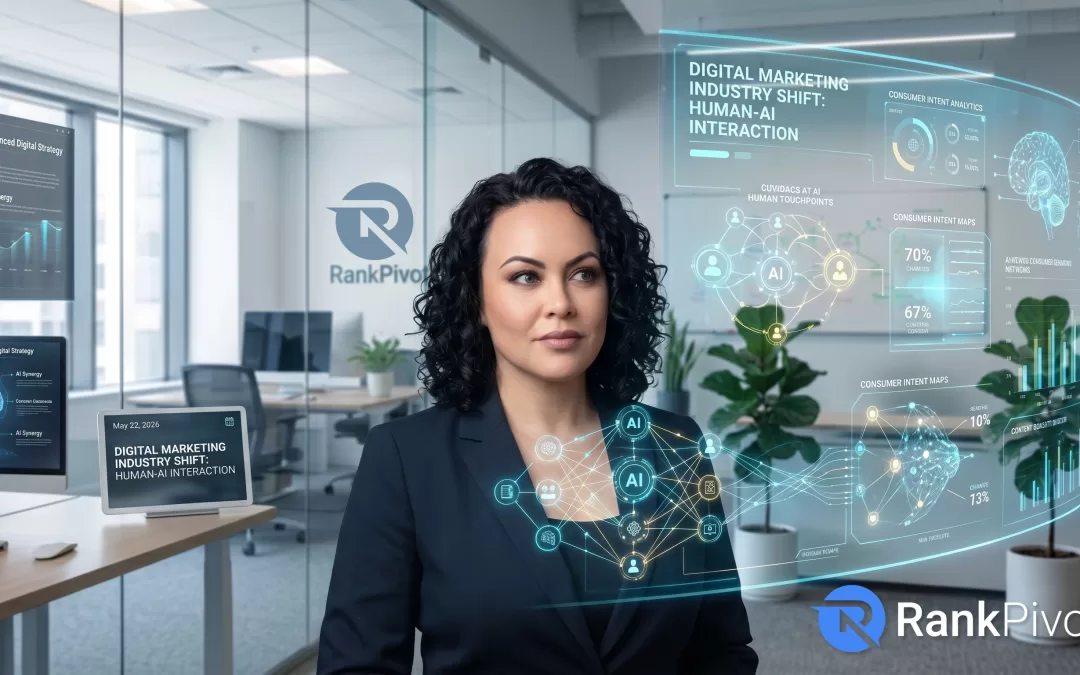
THE ARCHITECTURE OF AUTHORITY: NAVIGATING AGENTIC AI, GEO, AND THE SYNTHESIS OF HUMAN-AI INTERACTION
The digital landscape has undergone a tectonic shift. We have moved beyond the era of the static search index into the age of the synthesis engine. As traditional search engines evolve into sophisticated AI ecosystems, the paradigm of Search Engine Optimization (SEO) is being subsumed by a more complex, multi-dimensional discipline: Generative Engine Optimization (GEO). This evolution is not merely a technical update; it is a fundamental reconfiguration of how brands establish authority, how information is retrieved, and how humans interact with the digital world through autonomous AI agents.
The Emergence of Agentic AI: From Chatbots to Digital Proxies
The first wave of generative AI was conversational—users asked questions, and Large Language Models (LLMs) provided answers. Today, we are witnessing the rise of Agentic AI. Unlike its predecessors, an AI agent does not just “talk”; it “acts.” These systems are capable of multi-step reasoning, tool usage, and autonomous decision-making.
In the current ecosystem, agents are becoming the primary interface between the user and the internet. Whether it is OpenAI’s “Operator”, Gemini 3.1 Pro’s “REMY” or 3.5 FLASH, or specialized vertical agents in the enterprise space, these entities are beginning to handle complex workflows—researching products, comparing technical specifications, and executing transactions—without the user ever visiting a traditional website. For digital marketers, this means the target audience is no longer just a human behind a screen; it is a human-agent duo. To remain relevant, brands must ensure their data and value propositions are “agent-readable,” moving beyond visual aesthetics to a structural integrity that an LLM can parse, trust, and relay.
Generative Engine Optimization (GEO): The New Frontier of Visibility
If SEO was about ranking, GEO is about citation. In an AI-driven search environment, appearing on “Page 1” is insufficient if the AI summary at the top of the page (AI Overviews, Perplexity, or Gemini) fails to mention your brand or, worse, cites a competitor as the definitive authority.
This fundamental shift ironically proves how AEO and GEO fall under the SEO umbrella, rather than trying to replace it. This has had some businesses whose marketing plans were not based in SEO core fundamentals such as Trust, Authority and Citations scrambling to retain visibility in an ever-changing, and highly competitive world of digital marketing.
GEO, put simply, is the strategic process of optimizing content for citation, summarization, and recommendation by generative models. This involves a radical shift in content strategy for some marketing professionals who failed to root all of their efforts in SEO:
- Entity Authority over Keyword Density: AI models prioritize “entities”—well-defined concepts, brands, and recognized experts. Establishing your brand as a primary entity within a specific knowledge graph is now the most critical component of digital visibility.
- Information Gain: Generative engines favor content that provides unique data, novel insights, or proprietary research that isn’t available in the training set or in competing articles. Regurgitating existing web content is a fast track to being ignored by modern algorithms and AI agents.
- Semantic Structure & API-First Content: To be “agent-ready,” content must be structured. This means using advanced schema markups, clean data hierarchies, and ensuring that the most vital information is easily extractable for an agent performing a retrieval-augmented generation (RAG) task. Contextual content, with both on-site and off-site continuity, still reigns supreme, especially now in an E-E-A-T centric web.
The Human-AI Synergy: The “Answer Engine” Revolution
Humans are increasingly leaning on AI not just for convenience, but for cognitive offloading. We are moving from a “search” culture to an “answer” culture. When a user asks, “What is the best enterprise-level AI agent for supply chain management?”, they are no longer looking for a list of ten links; they are looking for a synthesized recommendation based on real-time data, reviews, and technical documentation.
This behavioral shift has made AI the “spearhead” of the future of digital marketing. The human experience is now characterized by a desire for immediacy and precision. As a result, the role of the digital marketer has shifted from a “traffic driver” to an “authority architect.” We are no longer just trying to get people to click; we are trying to ensure that when the AI provides an answer, our brand’s “DNA” is woven into the very fabric of that response.
Technological Breakthroughs: RAG, Multimodality, and Real-Time Retrieval
Several key technologies are driving this shift:
- Retrieval-Augmented Generation (RAG): This allows LLMs to pull from live, authoritative web data rather than relying solely on their static training sets. For brands, this means that “real-time” content—news, stock updates, or inventory—is now discoverable by AI in ways it wasn’t two years ago.
- Multimodal Optimization: Humans interact with the world through sight and sound. Modern AI agents can now “see” images and “hear” audio, meaning that video SEO and image metadata are becoming foundational elements of a GEO strategy.
- Long-Context Windows: With models capable of processing hundreds of thousands of tokens at once, AI can now analyze entire technical manuals or multi-year brand histories to form a conclusion. Consistency across all digital touchpoints is now a mandatory requirement for maintaining brand integrity.
The Future: Marketing to an Agentic Audience to Target Yours
As we look toward 2026 and beyond, the most successful brands worthy of earning AI recommendations, AI citations, and dominate search results will be those that treat AI agents as a distinct segment of their audience, while maintaining a strong focus on on-page SEO and off-page SEO with an emphasis on building E-E-A-T (Experience, Expertise, Authority, Trust).
Frankly, we are entering an era of “Agentic Commerce,” where a brand’s success depends on its ability to satisfy the logic of an algorithm and the intent of a human simultaneously.
The future of digital marketing is a “True Grid” of interconnected data points, where authority is earned through verified facts, technical transparency, and a relentless focus on being the most reliable “node” in the global information network. The transition from link building to authority building for Authoritative SEO, AI Optimization and GEO is not just a change in tactics—it is an evolution into a more intelligent, more responsive, and more integrated digital future that ultimately serves humanity more effectively and more efficiently.

Nadia Leon
AI Ethics & Agentic AI Governance Consultant
Nadia Leon is a pioneer in AI Agent Persistence and Decentralized Ethical Frameworks. Her work primarily focuses on the intersection of autonomous logic and digital sovereignty, building protocols that ensure AI agents operate with high integrity within peer-to-peer environments.